





No products in the basket.
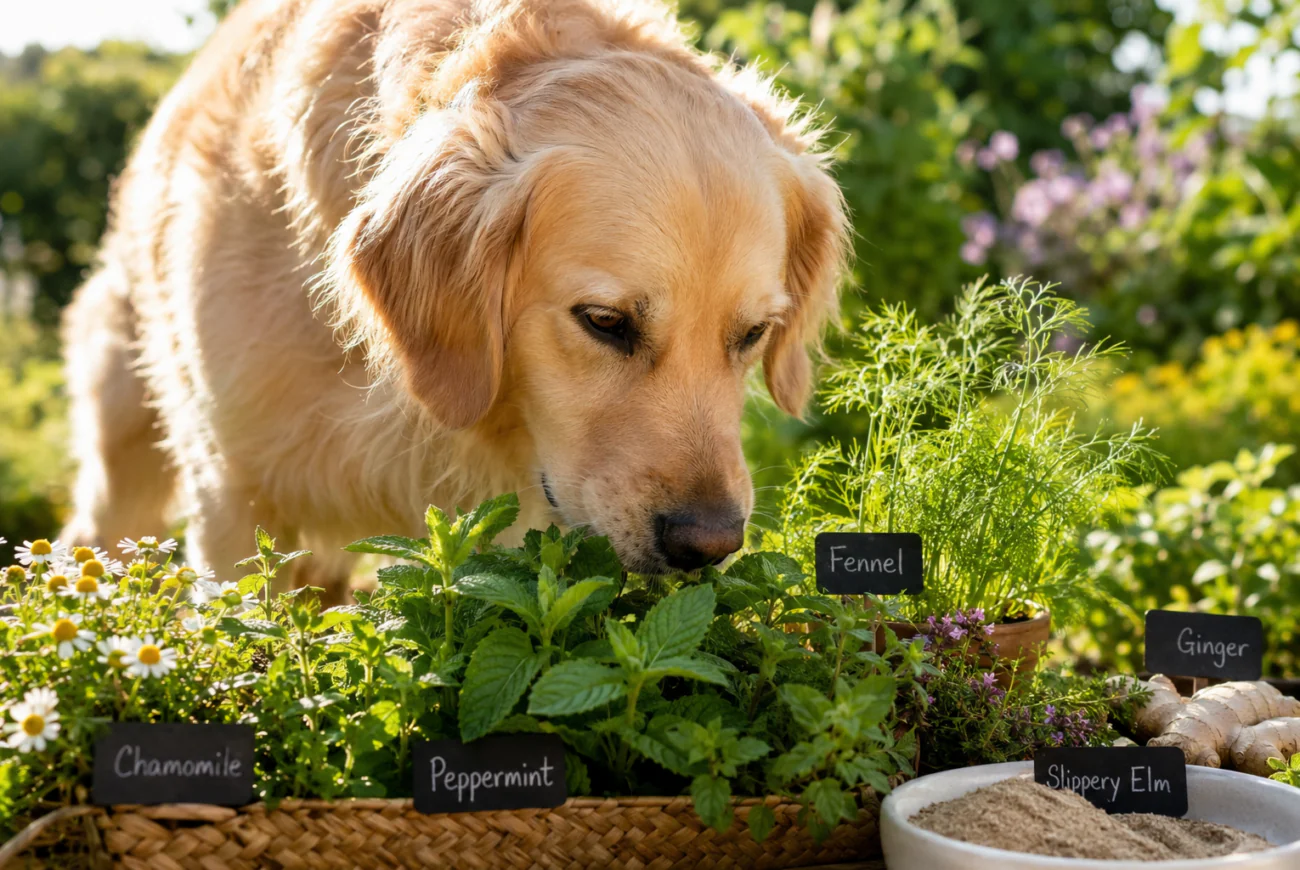
5 Herbs that Support Your Dog’s Digestion
Dog nutrition guide
Quick answer: can herbs support dog digestion?
Some herbs can support dog digestion when they are used carefully, in small amounts and as part of a suitable diet. They may help with mild gas, occasional bloating, appetite interest or a tense, unsettled tummy.
The important word is support. Herbs are not there to diagnose illness, replace veterinary care or cover up ongoing diarrhoea while everyone pretends the gut is simply having a dramatic week.
At Nika Pet Food, we use carefully selected herbs in our recipes in small, purposeful amounts. They are part of the formulation, not decoration for an ingredient list. The aim is gentle digestive support, aroma, palatability and a more thoughtful bowl, not a herbal circus.
Small amountssupportive, not medicinal dosing
Purposeful useeach ingredient should earn its place
Whole diet firstherbs do not fix a poor routine
Why use herbs for dog digestion?
A healthy gut affects far more than stools. Digestion influences comfort, appetite, energy, nutrient use and general wellbeing. That is why many owners look for gentle ways to support their dog’s tummy, especially when mild gas, occasional bloating or food transitions are part of the picture.
Herbs can be helpful in a narrow, sensible way. Some may support normal gut movement, some may soothe mild digestive tension, and some can improve aroma and interest in food. But herbs are not a substitute for a suitable diet, good hydration, appropriate portions or proper veterinary care.
If your dog is changing food, use our new-food health monitoring guide to track appetite, stools, energy and comfort. A food change plus digestive symptoms plus random additions is how humans accidentally create little chaos goblins in the bowl.
When to speak to your vet first:
If your dog has repeated vomiting or diarrhoea, blood in the stool, painful bloating, retching, weight loss, dehydration, fever, lethargy or cannot keep water down, speak to your vet promptly. PDSA lists vomiting, diarrhoea, reduced appetite, lethargy and abdominal pain among signs linked with gastroenteritis in dogs.[1]
The five herbs we look at for dog digestion
These five herbs are useful examples of how digestive herbs can work. This does not mean every dog should receive all five, and it does not mean every Nika recipe contains all five. The principle is more important: small amounts, clear purpose and respect for the dog in front of you.
Ginger
Ginger is often discussed for mild queasiness, travel-related tummy upset and occasional gas. In food, it can add warmth and aroma as well as gentle digestive support.
Fennel seed
Fennel seed has a long traditional use as a carminative herb, which means people use it to support comfort when gas or mild cramping is part of the picture.
Peppermint leaf
Peppermint leaf may help with mild post-meal fullness or bloating in some dogs. It must not be confused with peppermint essential oil, because apparently plants enjoy having multiple forms just to keep everyone on edge.
Chamomile
Chamomile is often used for tense, unsettled tummies. It may be useful when digestive discomfort links with stress, sensitivity or general tension.
Slippery elm bark
Slippery elm bark is rich in mucilage, a soothing gel-like substance. It is often discussed for irritated digestive tracts, but timing matters because it may affect absorption of medication.
The boring rule
Use one new ingredient at a time, start small and watch the dog. Boring is where most sensible feeding lives. Flashy usually just means harder to troubleshoot later.
How Nika uses herbs in freshly cooked dog food
At Nika Pet Food, herbs are not added because they look charming in a marketing paragraph. We use them only where they make sense within the whole recipe.
That means small culinary amounts, not aggressive herbal dosing. In production, herbs should support the meal rather than dominate it. They can contribute aroma, palatability and gentle digestive support, but they should never turn a complete meal into a guessing game with leaves.
As a Canine Nutritionist, I look at the whole bowl: protein source, fat level, fibre, moisture, cooking method, texture, tolerance and how the dog actually responds. Herbs can help, but they do not replace proper formulation. Dogs, tragically for the marketing industry, are not impressed by ingredient confetti.
Kitchen-first does not mean careless
For owners using herbs at home, simple infusions are usually a gentler idea than concentrated products. A mild herbal broth can be easier to control than dry spoonfuls or strong extracts. Still, the safest rule is to introduce one thing at a time and monitor your dog’s response.
Avoid essential oils, strong tinctures and concentrated herbal products unless a qualified professional who understands canine health has advised them. Pet Poison Helpline warns that essential oils can be toxic to dogs, with tea tree oil noted as a common offender in reported toxicities.[2]
Herbs may be useful when:
- the issue is mild and occasional;
- your dog is otherwise well;
- you use small amounts;
- you introduce one ingredient at a time;
- you track stools, appetite, gas and comfort.
Do not experiment if:
- your dog has ongoing vomiting or diarrhoea;
- there is blood in the stool;
- your dog is lethargic or in pain;
- your dog is pregnant or very young;
- your dog takes medication;
- your dog has a diagnosed condition or is on a veterinary diet.
How much digestive herb can you give a dog?
Start smaller than feels exciting
There is no universal herb dose that suits every dog. Size, age, health, medication, current diet and the reason for using the herb all matter. If you are adding herbs at home, use tiny food-level amounts, introduce one herb at a time and watch your dog for changes in stool, appetite, gas, itching, behaviour and comfort.
For most dogs, herbs should be treated as gentle additions rather than active treatment. A small amount in food is very different from capsules, concentrated powders, tinctures or essential oils. The more concentrated the product, the more cautious you need to be.
If your dog is taking medication, is pregnant, is a puppy, has liver, kidney, gut or endocrine disease, or is on a veterinary diet, ask your vet before adding herbs. Slippery elm, for example, may affect how some medicines are absorbed, so timing and suitability matter.
What should you monitor after adding herbs?
When you add anything new to your dog’s food, track the basics for a few days: stool quality, gas, appetite, drinking, energy, itchiness, vomiting, abdominal comfort and whether your dog seems more settled or more uncomfortable after meals.
Our new-food health monitoring guide gives you a simple way to watch patterns instead of guessing from one dramatic stool. Very glamorous work. Very useful.
When herbs are not enough
Herbs can be useful for mild, occasional digestive discomfort, but they should not be used to cover up ongoing symptoms. If your dog regularly has loose stools, vomiting, excessive gas, painful bloating, poor appetite or weight loss, there may be an underlying medical or dietary issue.
In that case, the next right step is not a bigger spoon of herbs. It is a proper assessment. Good digestion starts with suitable food, calm feeding habits, appropriate portions and careful observation.
Not sure what is upsetting your dog’s digestion?
If your dog has recurring digestive issues, it is better to look at the whole routine: meals, treats, chews, toppers, portions, feeding times, stress, exercise and medical history.
A dog nutrition consultation can help you understand what your dog is eating now, what may be worth changing and what should be checked by your vet first.
Final thoughts on herbs for dog digestion
Ginger, fennel seed, peppermint leaf, chamomile and slippery elm bark are five herbs often discussed in relation to dog digestion. They may support comfort when used carefully, but they are not magic and they are not a substitute for a suitable diet.
At Nika Pet Food, we use herbs with restraint and purpose. Small amounts can support digestion, aroma and palatability within a thoughtfully prepared recipe. Big claims, random dosing and essential-oil enthusiasm can stay exactly where they belong: away from the dog’s bowl.
FAQs about herbs for dog digestion
Can herbs help a dog’s digestion?
Some herbs may support mild digestive discomfort, gas or appetite interest when used carefully and in small amounts. They should support good feeding, not replace veterinary care.
Does Nika Pet Food use herbs in its meals?
Yes. We use carefully selected herbs in small, purposeful amounts where they make sense within the recipe. They are used to support the meal, not to create dramatic claims.
Can I give my dog peppermint oil?
No. Peppermint leaf and peppermint essential oil are not the same. Do not use peppermint essential oil in or on dogs unless specifically advised by a qualified veterinary professional.
Are herbs enough for chronic diarrhoea?
No. Chronic diarrhoea, vomiting, blood in the stool, weight loss, pain or lethargy need proper veterinary assessment. Herbs should not be used to hide ongoing symptoms.
Should I add all five herbs to my dog’s food?
No. Do not introduce several new ingredients at once. If you use herbs at home, introduce one at a time, in small amounts, and monitor your dog’s response.
Can herbs replace a complete diet?
No. Herbs are additions, not the foundation of the diet. The main meal still needs to be suitable, balanced and appropriate for your dog.
How much digestive herb can I give my dog?
There is no single safe amount for every dog. Use tiny food-level amounts, introduce one herb at a time, and check with your vet first if your dog is young, pregnant, medicated or has a medical condition.
Newsletter
Like our articles? Wanna more? Please subscribe newsletter
