





No products in the basket.
- Dogs, Pet Care, Pet Health
- 26 February 2026
- No Comments
January Dog Behaviour: Why Your Dog Seems Different in Winter
January Dog Behaviour: Why Your Dog Seems Different in Winter
Why January Feels Strange for Dogs
January dog behaviour often changes in winter, not because dogs become difficult, but because they respond to darker days, colder weather and shifts in routine. January makes humans feral, with new schedules, longer walks and dramatic plans for self-improvement. Meanwhile, dogs are simply adapting to different conditions and to a household that suddenly feels busier and more intense.
The fix is simpler than most people think. Instead of trying to reinvent your dog, protect what already works and make winter feel safe rather than demanding.
1. Protect the Routine Instead of Reinventing It
Dogs anchor themselves in predictability. January often disrupts that through altered work patterns, darker mornings and compressed evenings. When walk times jump around and the day becomes chaotic, many dogs become more unsettled rather than more motivated. Keep the basics steady. Hold on to regular walk windows, feeding rhythm and downtime. Consistency tells your dog, “You’re safe. Nothing is falling apart.” That message matters far more than any new enrichment gadget panic-bought at 11 pm.
2. Shorten Walks Without Shrinking the Experience
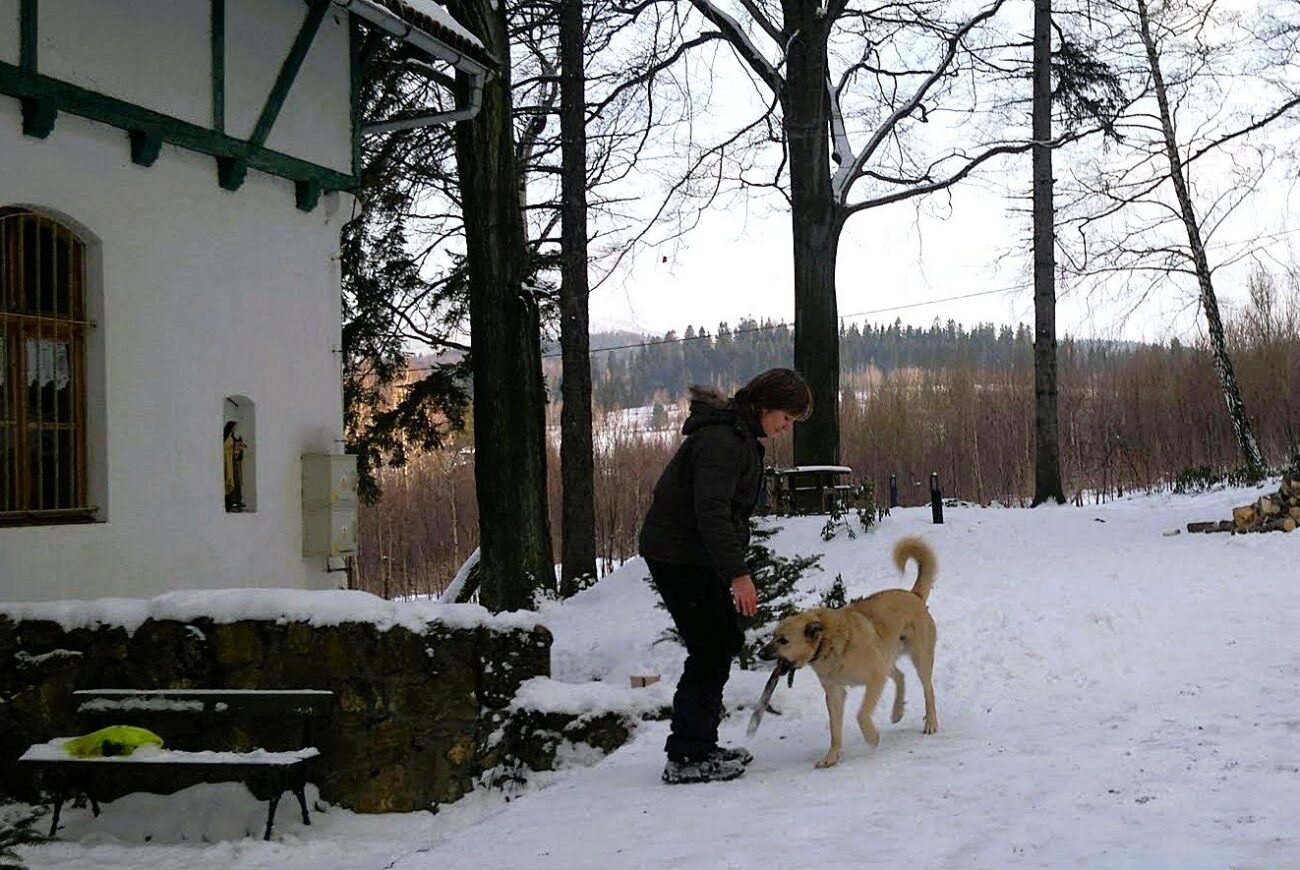
A winter walk does not need to be long to be good. Instead, it needs to be rich. Cold air changes scent, while frozen ground holds smells. Damp air thickens them, and wind drags them across the world like gossip. For your dog, the outside world becomes a live news feed of who has been where, what they ate and which fox is being theatrical again. So let them sniff. Let them investigate fewer places more deeply. A slower, scent-led walk can regulate the nervous system better than a longer march designed mainly to satisfy your step counter.
3. Let Sleep Expand Naturally
If your dog is sleeping more in January, that is not regression or laziness. Winter often brings increased rest, and rest supports immune function, emotional regulation and learning consolidation. Trying to interrupt that just to keep your dog active can backfire. A dog who sleeps well is not disengaged. More often, they are regulated. If your dog seems unusually lethargic, goes off food, loses weight, coughs, limps or simply does not seem like themselves, that is different and worth a health check. However, ordinary winter extra-snoozing is usually the body being sensible.
4. Lower Training Pressure While Keeping Clarity
January can turn training into a productivity project. More reps, more classes, tighter leads and faster corrections often follow. Dogs usually read that as pressure, not progress. Keep your cues clear, but lower the intensity. Use short sessions. Aim for easy wins. Reward calm engagement more often. Drop the moral judgment when your dog hesitates. Learning does not disappear during rest. It settles. If your dog looks stubborn in January, ask yourself a better question first. Did you become stricter, faster or less patient? Dogs notice micro-changes in posture, breathing and tension. They do not care about your planner.
5. Enrich the Environment Instead of the Schedule
Sensory interest does not require busyness. In winter, enrichment often works best when it is subtle. Try scent-based games at home, rotate resting locations, allow access to sheltered outdoor spaces or offer a calm sniff walk in a quiet area. These meet exploratory needs without demanding huge physical output. The goal is not to fill every hour. The goal is to give your dog a world worth noticing without turning life into a timetable.
6. Watch the Dog, Not the Calendar
The most useful reset in January is human attention. This time of year encourages comparison with last year, ideal routines and imaginary progress charts. Dogs ask for something much simpler: observation without agenda. When behaviour shifts, pause before interpreting it. Is this resistance, or adaptation? Could it be boredom, or simply rest? Perhaps your dog is not struggling at all, but just synchronising with winter. Understanding January dog behaviour helps owners respond with more patience, more structure and much less unnecessary pressure. None of these changes needs drama. That is the point. January is not a turning point for dogs. It is the same life under different conditions.
The Takeaway
Your dog does not need resolutions. They need coherence. Predictable routines, lower pressure, richer sensory experiences and permission to rest matter far more than your annual urge to optimise everything with a pulse.
Understanding January dog behaviour helps owners respond with more patience, better routines, and less unnecessary pressure. Most January dog behaviour is not a problem to fix. It is a seasonal shift to understand. If you let winter be winter, your dog will not fall behind. They will settle. And you might accidentally do the same, which is frankly inconvenient for the entire January self-punishment industry.
Newsletter
Like our articles? Wanna more? Please subscribe newsletter