




No products in the basket.
How to Transition from Kibble to Fresh Cooked Dog Food
How to Transition from Kibble to Fresh Cooked Dog Food
If you want to switch your dog from kibble to fresh food, the most important rule is simple: do it gradually. A proper transition from kibble to fresh-cooked dog food helps reduce the risk of digestive upset, gives your dog time to adapt, and makes the whole process far more successful.
At Nika Pet Food, we make freshly cooked dog food in small batches using human-grade ingredients, locally sourced where possible. Our recipes are prepared by a Canine Nutritionist, so the aim is not simply to make food that smells better than kibble, although most dogs would certainly vote for that. The aim is to help you move towards real, recognisable food in a safe and sensible way.
If you are ready to order after planning the transition, our fresh dog food delivery page explains how Nika meals can reach your home and how to start with a sensible first order.
If you are already planning the switch, you can begin with our fresh dog food starter bundle, which is designed to help first-time customers try the full range gradually.
Many owners choose to switch from kibble to fresh food because they want meals made with real ingredients rather than heavily processed pellets. Freshly cooked dog food can offer better moisture content, more recognisable ingredients and a different eating experience altogether. However, even a positive dietary change should be introduced with care. A dog that has eaten the same kibble for months or years needs time to adjust to a new texture, smell and nutrient profile.
Why switch your dog from kibble to fresh food?
There are several good reasons to switch your dog from kibble to fresh food:
- Fresh food contains more natural moisture
- Meals are made from recognisable ingredients
- Many dogs find fresh food easier to digest
- It can be a useful option for fussier eaters
- It often feels more natural and more appealing than dry kibble
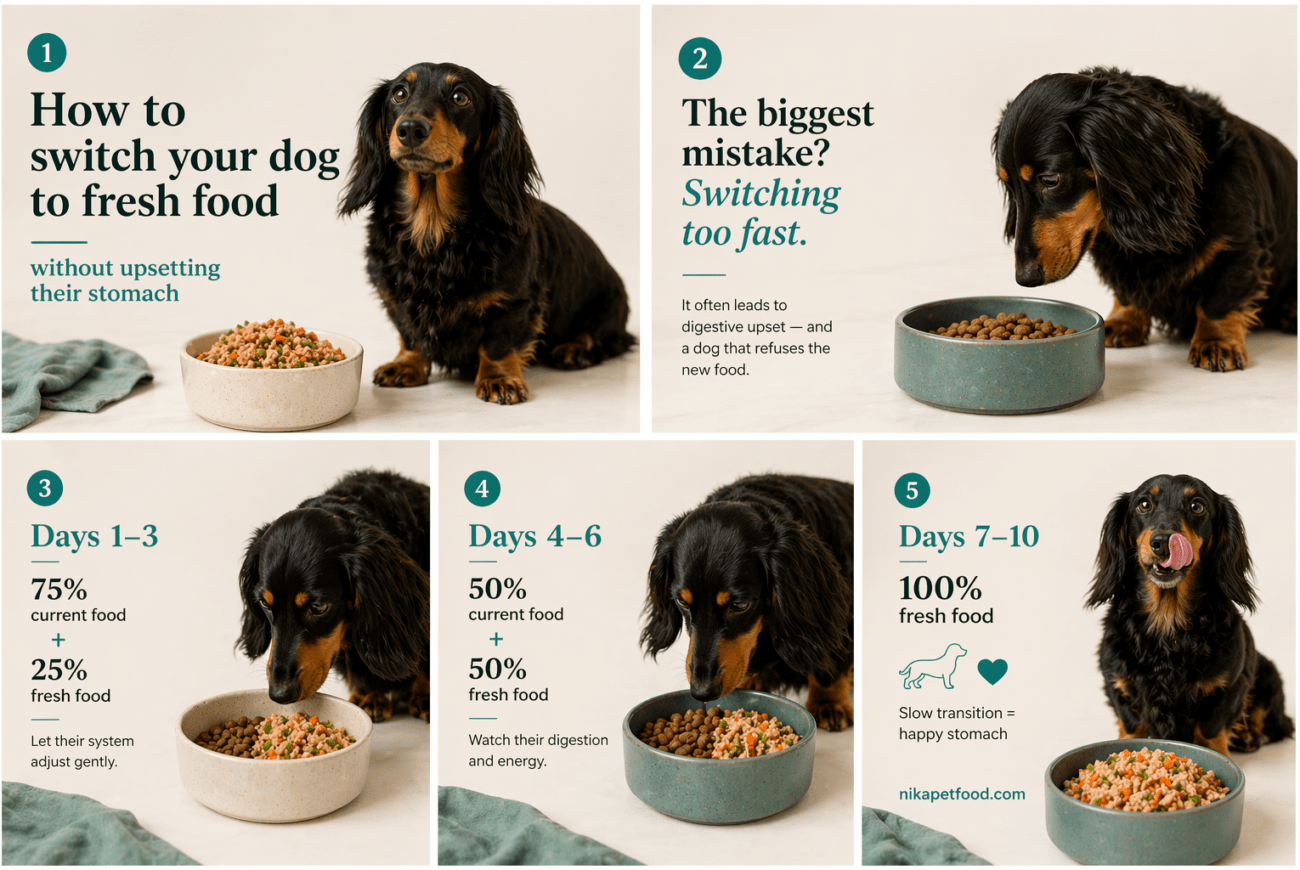
That does not mean you should change everything overnight. In fact, the biggest mistake people make when transitioning from kibble to fresh-cooked dog food is switching too quickly. That is usually when you see loose stools, digestive upset or a dog refusing the new food altogether.
Transition from kibble to fresh-cooked dog food: step by step
A slow transition from kibble to fresh-cooked dog food is usually the safest approach.
| Stage | Ratio | What to do |
|---|---|---|
| Days 1–2 | 75% kibble, 25% fresh food | Mix a small amount of fresh cooked dog food into your dog’s usual meal and watch appetite, stools and comfort. |
| Days 3–4 | 50% kibble, 50% fresh food | Increase the fresh food if your dog is comfortable and digestion looks settled. |
| Days 5–6 | 25% kibble, 75% fresh food | Continue monitoring your dog while the fresh food becomes the main part of the meal. |
| Day 7 onwards | 100% fresh food | Move fully to fresh food if your dog is digesting it well. Slow down if needed. |
Days 1 to 2: 75% kibble, 25% fresh food
Start by mixing a small amount of fresh cooked dog food into your dog’s normal meal. At this stage, the aim is not to impress anyone with nutritional heroics. The aim is simply to introduce the new food gently. Watch your dog’s stool, appetite and overall comfort. If you would like a more detailed checklist, read our guide on how to monitor your dog’s health on a new food.
Days 3 to 4: 50% kibble, 50% fresh food
If the first stage goes well, increase the proportion of fresh food. This is the point where many dogs start to recognise that something much nicer has appeared in the bowl. It is also the stage where you should continue monitoring digestion rather than getting carried away by their enthusiasm.
Days 5 to 6: 25% kibble, 75% fresh food
By now, your dog should be getting used to the new smell, texture and moisture level. A gradual switch from kibble to fresh food gives the digestive system time to adapt without unnecessary stress.
Day 7 onwards: 100% fresh food
Once your dog is doing well, you can move fully to fresh-cooked dog food. At this stage, the transition from kibble to fresh-cooked dog food is complete. The bowl now contains a full fresh meal rather than a mixture.
Can you mix fresh food with kibble?
Yes, in most cases you can mix freshly cooked dog food with kibble during the transition period. In fact, this is usually the easiest way to help your dog adjust to a new texture, smell and moisture level. Start with a small amount of fresh food alongside the food your dog already knows, then gradually increase the fresh portion over several days.
The important point is consistency. Try not to change the recipe, treats and feeding times all at once. If your dog has a sensitive stomach, is elderly, has a medical condition or is on a prescription diet, speak to your vet before making changes. As Aleksandra often says, raising a dog is like raising a child: big changes are easier when they are gentle, predictable and done with patience.
What to watch during the transition
Some mild changes can be normal when you switch your dog from kibble to fresh food. These can include slightly softer stools, temporary flatulence or a noticeable increase in interest at mealtimes. Frankly, that last one tends to happen when dogs realise they have been upgraded from beige pellets to actual food.
However, diarrhoea, vomiting or a strong refusal to eat are signs to slow down. If that happens, return to the previous ratio for a day or two before moving forward again. Dogs with sensitive stomachs, long-term digestive issues or chronic health conditions may need an even slower transition. In those cases, it is sensible to speak to your vet or a qualified canine nutritionist first.
Tips to make the switch from kibble to fresh food easier
To make the transition from kibble to fresh-cooked dog food smoother, keep things consistent. Feed at the same times each day. Start with one recipe rather than several. Avoid introducing too many new treats and extras at once. Consistency helps the digestive system settle and makes it easier to see how your dog is responding.
This is also why we usually recommend beginning with one recipe and sticking with it for the first couple of weeks. Once your dog is stable on fresh food, you can introduce other proteins one at a time.
The Nika Pet Food approach
At Nika Pet Food, we believe a switch from kibble to fresh food should be practical, gradual and based on real ingredients. We cook our meals by hand in small batches using fresh ingredients, including human-grade ingredients and locally sourced ingredients where possible. Our recipes are prepared by a Canine Nutritionist, so every meal starts with a sensible nutritional foundation rather than guesswork.
The goal is not to make dramatic claims. The goal is to offer dogs real food and to help owners make the transition safely and sensibly.
Our recommendation
Choose your first fresh food step
If you are switching from kibble, the best next step is small, gradual and easy to judge. Pick the route that fits your dog now, then build from there once you know what suits their appetite, stools and routine.
Best first order
Trial Bundle
Try all seven complete recipes before committing to a larger order. It is the easiest way to discover favourites while introducing fresh food gradually.
For sensitive dogs
Sensitive stomach guidance
If your dog has loose stools, itching, repeated tummy upset or a history of food sensitivity, do not rush the switch. Start slower and choose recipes more carefully.
For everyday feeding
Fresh Dog Food range
Once you know your dog’s favourites, you can choose individual freshly cooked meals for regular feeding. Browse the full range and build an order around what works.
Need help choosing?
Personalised Feeding Advice
If your dog is fussy, older, sensitive or has specific feeding concerns, ask before changing everything. A guided first step can save a lot of trial and error.
FAQs about switching from kibble to fresh food
How long does it take to switch a dog from kibble to fresh food?
Many dogs can transition over about seven to ten days, but some need longer. If your dog has a sensitive stomach, is older, or has an existing health condition, take it more slowly and ask your vet for advice.
Can I mix fresh dog food with kibble?
Yes, mixing fresh food with kibble is often a practical way to transition. Start with a small amount of fresh food, then gradually increase it while reducing the kibble.
What if my dog gets loose stools during the switch?
Slow the transition down. Return to the previous ratio for a day or two, keep meals consistent, and avoid introducing new treats at the same time. You can also use our new-food health monitoring guide to track stools, energy, weight and coat condition. If diarrhoea, vomiting or discomfort continues, speak to your vet.
Should I switch to several fresh food recipes at once?
It is better to begin with one recipe and keep it consistent for the first couple of weeks. Once your dog is settled, you can introduce other proteins gradually.
Is freshly cooked dog food better than kibble?
Freshly cooked dog food offers moisture, recognisable ingredients and a different feeding experience from dry kibble. The best choice depends on your dog’s needs, digestion and lifestyle, so the transition should always be done gradually and sensibly.
If you are planning to switch your dog from kibble to fresh food, take it slowly, keep it consistent and give your dog time to adjust. A careful transition from kibble to fresh cooked dog food is the best way to build confidence, protect digestion and make the change successful.
What Dog Owners Say After Switching to Nika
“I switched my dog’s food a few months ago to Nika Pet Food, he’s usually so fussy and I’ve found it difficult to find dog food he enjoys. Eddie absolutely loves Nika Pet Food and I’ve even seen a difference in his energy levels since switching him too.”
— Rhianna Stacey, Google Review ⭐⭐⭐⭐⭐
“I used to cook for my dog but always worried she wasn’t getting everything she needed. Now with Nika’s I know she’s thriving. It actually costs less too, so win win — happy dog, happy owner.”
— Les Smith, Google Review ⭐⭐⭐⭐⭐
“Two extremely happy (fussy) whippets love Nika pet food. These are dogs that turn their long noses up at treats! Previously they had me roasting chicken every day. This is a brilliant, healthy meal for them that they really enjoy.”
— Seven Cellars, Google Review ⭐⭐⭐⭐⭐
Ready to make the switch? The easiest way to start is with our Trial Bundle — seven freshly cooked recipes so your dog can discover their favourites before you commit to a regular order.
You can also read our dedicated guide on alternatives to kibble if you are still weighing up your options.
Newsletter
Like our articles? Wanna more? Please subscribe newsletter
