Can Dogs Eat Buckwheat? Benefits, Risks and Feeding Tips
Dog nutrition guide
Quick answer: can dogs eat buckwheat?
Whether buckwheat is suitable depends on the whole diet and the individual dog. Buckwheat is used in some dog foods and is not wheat, but no single ingredient can determine whether a food suits every dog.
Buckwheat is a gluten-free pseudocereal, not a type of wheat.
The practical points are to keep any buckwheat plain, cook it without seasoning and introduce a dietary change gradually. Do not serve it with salt, butter, onion, garlic, sauces or seasoning.
Buckwheat is one ingredient within a complete, suitable diet. It is not a health food or a verdict on whether a food is right for every dog.
If your dog has symptoms, recurring digestive problems, a diagnosed medical condition or is on a veterinary diet, discuss any dietary change with your vet before adding a new carbohydrate source.
If you are considering a new food or ingredient for a dog without those concerns, introduce it gradually and monitor how your dog responds.
For non-urgent individual feeding questions, see our dog nutrition consultation information. This does not replace veterinary advice for a dog that is unwell.
Gluten-freebuckwheat is not wheat
Cooked onlyserve plain cooked groats
Introduce slowlywatch stools and appetite
What is buckwheat?
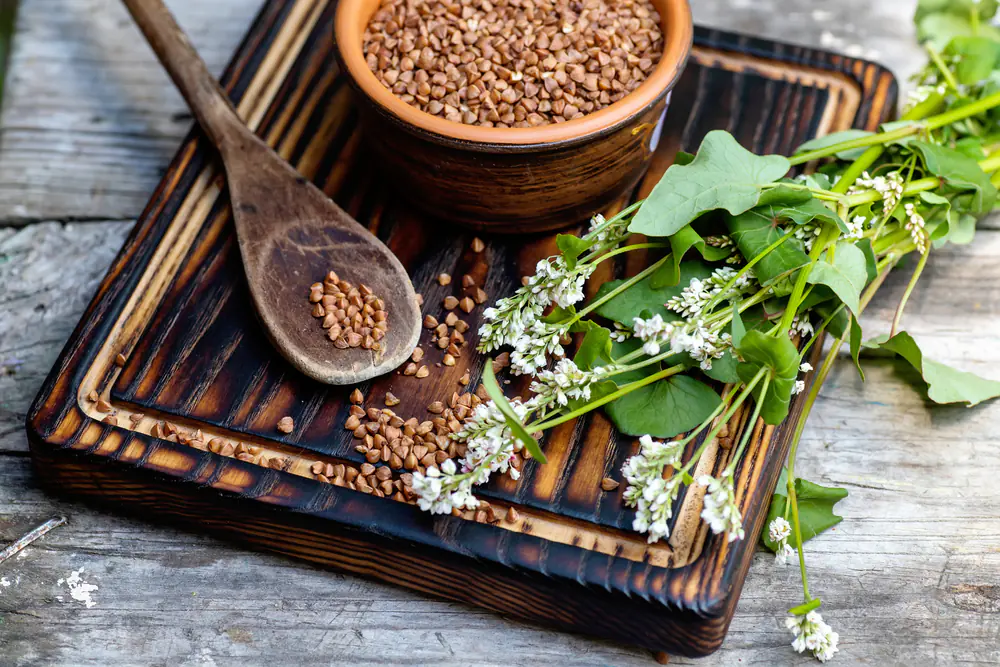
Buckwheat is a seed from the Fagopyrum plant. Although the name includes “wheat”, buckwheat is not wheat and is not a cereal grain. It is usually described as a pseudocereal, which means it is used in a similar way to grains but comes from a different type of plant.
For dogs, the practical point is simple: buckwheat can be used as a cooked carbohydrate source in some diets. It is naturally gluten-free and can be useful when a dog needs something different from wheat-based ingredients.
Possible benefits of buckwheat for dogs
Buckwheat is not a miracle ingredient, but it can be useful when it is cooked properly and used in the right context.
A gluten-free option
Buckwheat is naturally gluten-free, despite the confusing name. That may make it useful in diets where wheat or gluten-containing ingredients are being avoided.
Useful fibre
Cooked buckwheat contains fibre, which can help support normal digestive function as part of an appropriate overall diet.
Slow-release energy
Buckwheat provides complex carbohydrates. For some dogs, this can support steady energy when used sensibly alongside quality protein and fats.
A change from common grains
Some owners look for alternatives to more familiar carbohydrate sources. Buckwheat can be one option, provided the whole diet still makes sense.
When should you be careful with buckwheat?
Even a useful ingredient can cause problems if it is introduced too quickly, fed in unsuitable amounts or added to a diet that is already unbalanced.
Buckwheat may suit your dog if:
it is cooked plainly, without seasoning;
your dog tolerates carbohydrate sources well;
you introduce it gradually;
it forms part of a complete and suitable diet;
you monitor stools, appetite and comfort.
Be more cautious if:
your dog has ongoing diarrhoea or vomiting;
your dog has a diagnosed medical condition;
your dog is on a veterinary diet;
your dog reacts badly to diet changes;
you are adding it to an already unclear home-made diet.
Important:
Buckwheat should not replace a complete diet. The WSAVA Global Nutrition Guidelines give veterinary teams a framework for nutritional assessment and recommend that nutrition is considered as part of routine care.[1]
How to serve buckwheat to dogs
If you want to try buckwheat, keep it boring. Boring is underrated. Boring is often where the digestive system stops filing complaints.
Cook it plainly
Use plain cooked buckwheat groats. Do not add salt, stock cubes, onion, garlic, butter, sauces or seasoning.
Start small
Introduce a small amount first, especially if your dog is sensitive or has not eaten buckwheat before.
Watch the response
Monitor appetite, stools, wind, itching, energy and comfort. If something changes, slow down or stop.
Keep the whole bowl balanced
Buckwheat is only one ingredient. It does not make a meal complete by itself, no matter how confident the internet sounds today.
Buckwheat in Nika Pet Food
At Nika Pet Food, we use ingredients with a purpose. Buckwheat can be useful in recipes where we want a gluten-free carbohydrate source, steady energy and a different texture from dry food.
If you are comparing fresh food with kibble, our guide to fresh dog food vs kibble explains the practical differences in processing, moisture, storage and palatability.
If your dog is moving from dry food to freshly cooked meals, read our guide on how to switch from kibble to fresh food. A slow transition is usually kinder to the digestive system than a sudden heroic upgrade, because biology did not ask for drama.
If your dog has gone off dry food, it may not be about buckwheat at all. Appetite, stress, dental discomfort, routine changes and learned behaviour can all affect feeding. Our guide on why your dog won’t eat kibble explains what to check before assuming your dog is simply being fussy.
Ingredient information
For current ingredient information, see the Turkey & Whole Grains recipe page and check the pack label before feeding. This article provides general information and cannot determine whether any recipe is suitable for an individual dog.
Not sure whether buckwheat suits your dog?
If your dog has a sensitive stomach, a medical condition or repeated food reactions, it is better to look at the whole diet rather than blaming or praising one ingredient. Ingredients matter, but context matters more. Annoying, but true.
You can use our dog nutrition consultation if you want practical, individual guidance on your dog’s current diet, body condition, digestion and feeding routine.
FAQs about buckwheat for dogs
Can dogs eat buckwheat?
Yes, many dogs can eat plain cooked buckwheat in suitable amounts. It should be introduced gradually and used as part of a complete, appropriate diet.
Is buckwheat the same as wheat?
No. Buckwheat is not wheat and is not a cereal grain. It is a gluten-free pseudocereal.
Is buckwheat better than rice for dogs?
Not automatically. Buckwheat and rice can both suit some dogs when they are cooked plainly and used in the right context. Buckwheat is naturally gluten-free and can provide useful fibre and slow-release carbohydrates, while rice is often used as a simple, gentle carbohydrate. The better choice depends on the dog, the rest of the diet and how well that dog tolerates each ingredient.
Can dogs eat raw buckwheat?
This article is about plain cooked buckwheat groats. For everyday feeding, cooked buckwheat is the sensible option. Avoid seasoned products and anything cooked with onion, garlic, salt or rich sauces.
Is buckwheat good for dogs with sensitive stomachs?
It depends on the dog. Some dogs tolerate cooked buckwheat well, while others need a more careful food trial. If your dog has ongoing digestive issues, ask for individual advice instead of adding ingredients randomly and hoping the gut accepts your management style.
How much buckwheat can I give my dog?
There is no single amount that suits every dog. Size, body condition, activity, current diet and health all matter. Start with a small amount and make sure the whole diet remains suitable and complete.
Can puppies eat buckwheat?
Puppies have specific nutritional needs during growth. Do not build a puppy diet around individual ingredients without proper guidance. Use a complete, age-appropriate food and ask for advice if you are unsure.